
Builder registration and home indemnity insurance in WA
By Omar Costa · Updated 2026-08-12
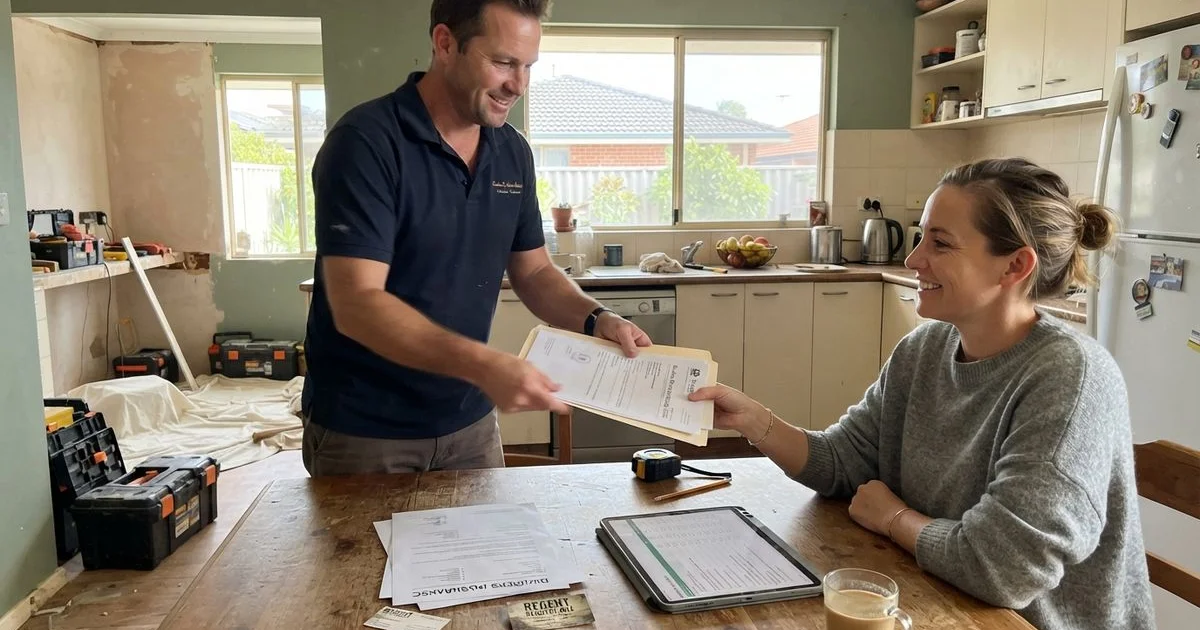
Builder registration and home indemnity insurance are two of the least exciting parts of hiring a contractor, and two of the most important. Neither guarantees a good renovation, but skipping the check can leave you with no real recourse if a project goes badly wrong.
Why builder registration matters
In WA, building work above a certain scale generally needs to be carried out by a registered building contractor, someone who has met licensing requirements set by the state’s building industry regulator. Registration doesn’t guarantee quality, but it does mean the contractor has met a baseline standard and can be held accountable through a formal regulatory process if something goes seriously wrong. Before signing a contract, ask for the contractor’s registration details and confirm them independently rather than taking a business card at face value.
Some smaller-scale work, minor repairs or work below a certain value, may not require a registered builder specifically, but larger renovations, extensions and new structures generally do. If you’re not sure whether your project falls into the category that requires registration, ask the contractor directly, and if the answer feels vague, that’s worth treating as a prompt to check with the regulator yourself.
This is general information, not legal advice. Registration thresholds and requirements can change and vary by project type, so confirm your specific obligations with WA’s building industry regulator or a solicitor before signing a significant contract.
What home indemnity insurance actually protects
Home indemnity insurance exists for a specific, narrow purpose: protecting you as the homeowner if your builder is unable to complete the work or fix defects because they’ve died, disappeared, or become insolvent. It’s a different thing entirely from a builder’s public liability insurance, which covers accidents or damage during the build, and from any warranty the builder personally offers. If a builder can’t complete your renovation and there’s no home indemnity insurance in place, you can be left covering the cost of finishing or fixing the work yourself.
It’s worth understanding that this cover typically only applies above a certain contract value, and the exact threshold and rules can shift over time. Rather than guessing whether your project qualifies, ask your builder directly whether a certificate applies to your contract, and get a copy for your own records before work starts, not after a problem arises.
| What to check | Why it matters |
|---|---|
| Registration number, verified independently | Confirms the builder meets WA’s licensing requirements |
| Home indemnity insurance certificate | Protects you if the builder can’t finish due to death, disappearance or insolvency |
| Public liability insurance | Covers accidents or damage during the build |
| Written contract with scope and payment schedule | Gives you something to point to if a dispute arises |
Getting this in writing before you sign
Ask for evidence of registration and insurance before signing, not after work has started. A legitimate, established contractor will have this information ready and won’t treat the request as unusual. If a contractor is reluctant to provide registration details or insurance certificates, treat that as a serious warning sign regardless of how good their quote or portfolio looks.
A quick, practical way to raise this without it feeling like an interrogation is to ask it as part of your standard quoting questions, alongside timeline and price, rather than as a separate, pointed challenge. Most established contractors are used to being asked and will simply hand over the details as part of their standard paperwork.
Where this fits with everything else
Registration and insurance checks are the foundation, not the whole picture. Separately, confirm whether your project also needs council or planning approval, since that’s checked before work starts rather than after, and the renovation permits and council approval guide sets out when it applies. Once you’ve confirmed a contractor meets these basics, the rest of your decision should come down to communication, past work, and how they’ve handled problems on previous jobs, the kind of detail covered in customer reviews and in how a business is scored. You can browse this directory to compare contractors, and our methodology page explains how listings are scored, including on consistency and verified information.
Why it’s worth the extra few minutes
None of this takes long to check, and most of it is a simple phone call, an email, or a quick search of a public register. The homeowners who end up in the worst position after a renovation goes wrong are rarely the ones who asked too many questions upfront. Treat this as a normal, expected part of hiring a contractor rather than an awkward extra step, and any builder worth working with will treat it the same way.
Common questions
- How do I check if a builder is registered in WA?
- Ask the contractor directly for their registration number and confirm it against the relevant WA building industry regulator's public register. A legitimate, currently registered builder will have no trouble providing this.
- What does home indemnity insurance actually cover?
- It's designed to protect the homeowner if the builder can't complete the work or fix defects, typically because of death, disappearance or insolvency. It isn't the same as the builder's own public liability insurance, which covers accidents on site.
- Is home indemnity insurance required for every renovation?
- Requirements can depend on the value and type of the work. Ask your builder directly whether it applies to your project, and get written confirmation rather than a verbal assurance.
- What if my contractor isn't registered?
- For work that requires a registered builder, using an unregistered one leaves you with far less protection if something goes wrong, and can cause problems with insurance claims or at resale. Confirm registration before signing anything.