
Renovation financing and how to protect your payments in WA
By Omar Costa · Updated 2026-07-17
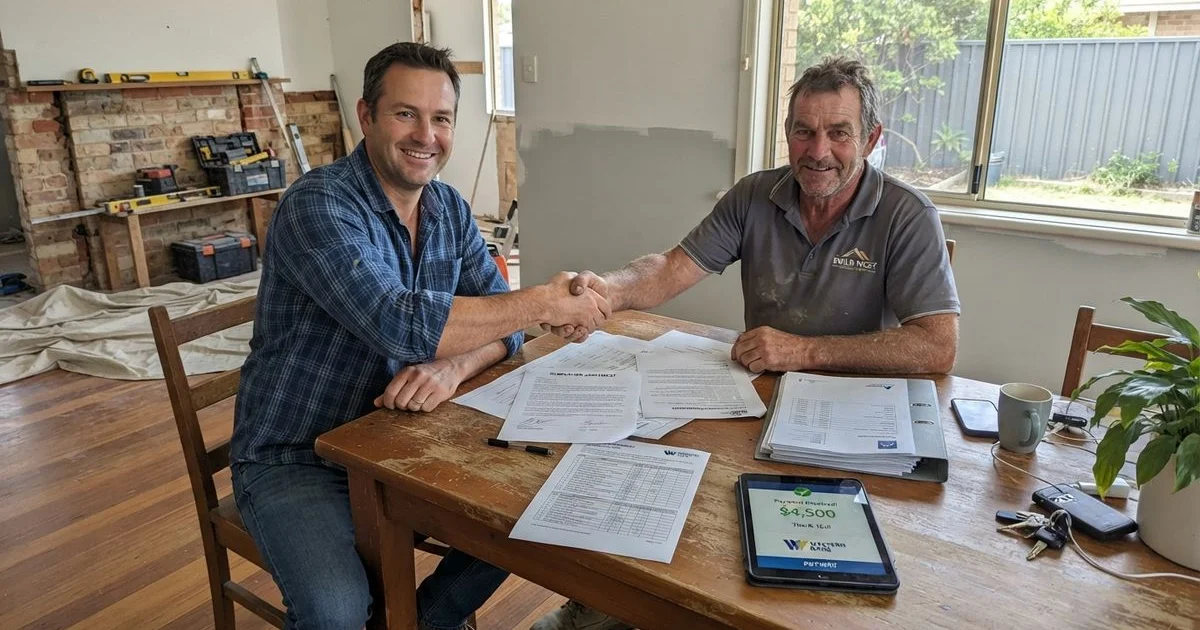
Getting the money side of a renovation right matters as much as picking the right contractor. Most disputes that end up in the complaints reviewers mention aren’t really about tiling or timelines, they’re about who paid what, when, and whether the work matched the money that had already changed hands. This guide covers how Perth homeowners typically fund a renovation and how to structure payments so you’re never exposed for more than the work actually completed.
How people actually fund a renovation
For smaller jobs like a bathroom refresh or a kitchen update, many owners pay from savings or redraw against an existing mortgage, since the interest rate is usually lower than a personal loan and there’s no separate application. For a full home renovation, an extension or a granny flat build, a dedicated construction loan is common. These release funds in stages as a lender’s inspector confirms each stage of work is complete, which protects you from paying ahead of progress. A personal loan or line of credit is faster to set up and doesn’t require the same paperwork, but it usually comes with a higher interest rate, so it tends to suit smaller, shorter jobs rather than a full renovation.
Whichever route you take, a mortgage broker who works with renovation clients specifically can usually save time comparing options, since the right structure depends on your existing loan, equity and the size of the job.
Fixed-price and cost-plus contracts also affect how you should think about financing. A fixed-price contract makes budgeting straightforward, since the total is set before you draw down funds. A cost-plus arrangement, where you’re billed for materials and labour as the job progresses, needs more of a buffer in your financing, since the final figure isn’t locked in until the job is finished. If you’re using a construction loan, ask your lender how it handles cost-plus billing before you commit to that pricing structure with a contractor.
How staged payments should work
A well-structured contract ties each payment to a specific, checkable stage of work, not to the calendar. A typical structure looks something like this, though the exact split varies by contractor and job size:
| Stage | What should be complete | Rough share of total |
|---|---|---|
| Deposit | Contract signed, materials ordering can begin | Small, to secure the booking |
| Demolition / rough-in | Old fixtures removed, plumbing and electrical roughed in | Early-stage share |
| Waterproofing / framing | Waterproofing certified or structural frame complete | Mid-project share |
| Fit-out | Tiling, cabinetry, fixtures installed | Later-stage share |
| Completion | Final inspection, snag list cleared, handover | Final share, held until you’re satisfied |
The point of staging is simple: at no point should the amount you’ve paid be meaningfully ahead of the work that’s been done. If a contractor asks for most of the money upfront, or wants the final payment released before a proper inspection and snag list, that’s worth questioning before you agree.
Red flags worth slowing down for
A few patterns come up again and again in the kind of complaints reviewers report: quote delays that stretch on for weeks, a job that balloons from a five-week estimate to sixteen weeks with no clear explanation, or a contractor who goes quiet once a deposit has cleared. None of these are proof of a scam on their own, but together they’re worth treating as a signal to pause. Ask for everything in writing, including any variation to the original price, and be cautious of anyone who resists putting a payment schedule on paper or insists on cash only.
If a variation does come up, a legitimate one should be explained before the extra work happens, not billed after the fact as a surprise. Ask what caused it, what it costs, and get sign-off on the revised price in writing before the contractor proceeds. A contractor who treats variations as a normal, well-documented part of the job is a very different proposition to one who uses them to quietly inflate an initially low quote.
Getting the contract right from the start
A proper renovation contract should set out the scope of work in enough detail that there’s no ambiguity about what’s included, the payment schedule tied to stages rather than dates, start and expected completion timing, and what insurance and warranty cover the work. If a contractor can’t or won’t provide this before work starts, treat that as a bigger warning sign than any single price. You can compare ranked local contractors from the home page, and the scoring behind those rankings, including how consistency of past work is weighed, is set out on our methodology page.
This is general information, not financial or legal advice. For a contract-specific question, or before signing anything for a large-value project, get advice from a solicitor or licensed financial adviser.
Common questions
- How much deposit is normal for a renovation in WA?
- A modest deposit to secure your slot and cover initial ordering is standard. Be wary of anyone asking for a large percentage, or the full amount, before any work has started.
- What's the difference between a fixed-price and a cost-plus contract?
- A fixed-price contract quotes one number for an agreed scope, with variations only for changes or genuine surprises. A cost-plus contract bills materials and labour as they're used, which can work out cheaper or more expensive and gives you less certainty upfront.
- Can I use my home loan to fund a renovation?
- Many owners redraw against their existing mortgage or set up a construction loan that releases funds in stages as work is completed. A mortgage broker can compare this against a personal loan, which is usually faster to arrange but carries a higher interest rate.
- What should a renovation contract include?
- A written scope of works, a fixed price or a clear pricing method, a payment schedule tied to project stages, start and completion dates, and details of insurance and any warranty. Verbal promises don't hold up if something goes wrong.