
DIY or hire a contractor? What's worth doing yourself in a renovation
By Omar Costa · Updated 2026-07-31
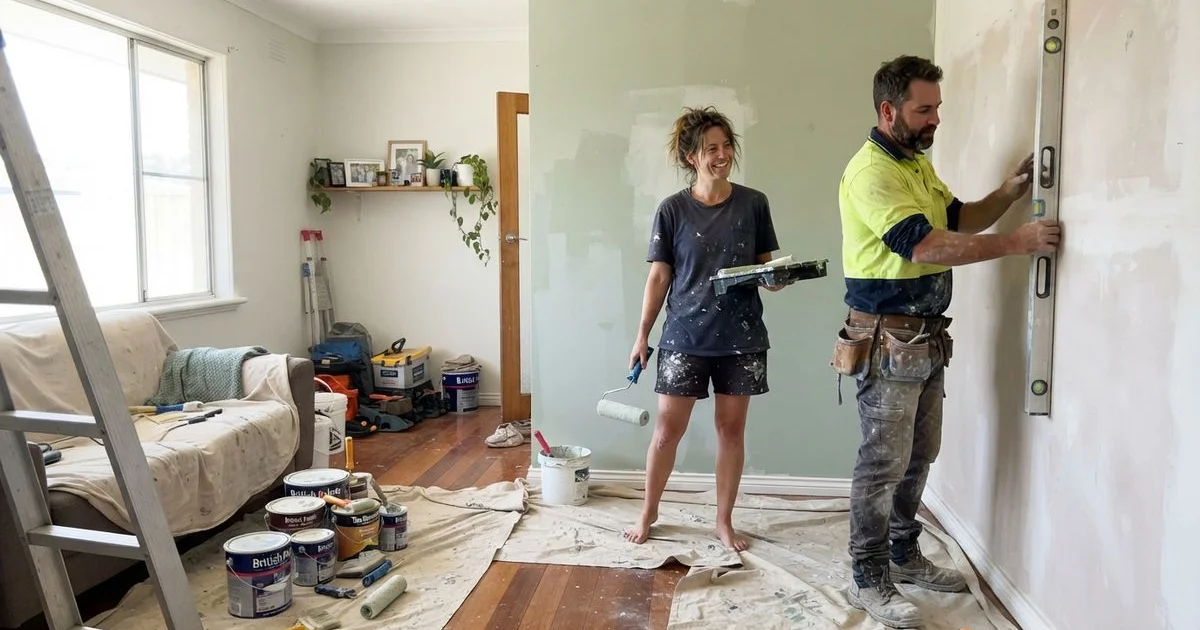
Every renovation involves a decision about how much to do yourself. For some tasks that’s a genuine, sensible choice. For others, it isn’t really a choice at all, since the work legally has to be done by a licensed tradesperson. This guide sets out where that line sits, and where DIY can save real money without adding real risk.
Tasks that are legally off-limits for DIY
In Western Australia, electrical and plumbing work that needs to be certified or connected to the mains or a gas supply has to be carried out or supervised by a licensed tradesperson. This isn’t a suggestion, it’s a legal requirement, and unlicensed work in these areas can cause real problems down the track: insurance claims can be knocked back, and unpermitted or uncertified work can hold up a sale when a buyer’s building inspection turns it up. If a job involves running new circuits, moving a gas line or connecting new plumbing, that part of the work needs a licensed trade regardless of how confident you feel with tools.
Tasks that are genuinely reasonable to DIY
Painting is the classic entry point, and for good reason: mistakes are forgivable, the tools are cheap, and the skill gap between a DIY job and a professional one is smaller than for most other trades. Demolition of non-structural fixtures, old cabinetry, tiles you’re replacing anyway, old vanities, is another area where DIY can save real money, provided you’re careful about what’s structural and what isn’t, and cautious about disturbing anything that might contain asbestos in an older home. Flat-pack cabinetry assembly, basic garden and landscaping work, and general clean-up between trade stages are all reasonable for a confident DIYer.
Before you take on any demolition yourself, ask your contractor what they’d rather you left alone. Some builders are happy to hand over a room for you to strip back before they arrive; others find self-managed demolition slows their own schedule down if it’s not done to their sequence. A quick conversation upfront avoids doing work that ends up being redone.
| Task | DIY-friendly | Needs a licensed trade |
|---|---|---|
| Painting walls and trim | Yes | — |
| Demolition of non-structural fixtures | Often, with care | — |
| Electrical wiring or new circuits | No | Yes |
| Plumbing connected to mains or gas | No | Yes |
| Waterproofing a wet area | Not recommended | Best left to a specialist |
| Tiling | Possible for the confident | Often hired for finish quality |
| Structural changes (load-bearing walls) | No | Yes, engineer and licensed builder |
Where it gets genuinely tricky
Tiling and waterproofing sit in a grey area. They’re not legally restricted the way electrical and plumbing are, but they’re unforgiving of mistakes: a waterproofing failure can mean a leak into a ceiling below months or years later, and it’s expensive to fix once tiles are down. Unless you have real experience, this is one area where the cost of getting it wrong tends to outweigh the money saved doing it yourself.
Kitchen and bathroom cabinetry installation sits in a similar spot. Flat-pack assembly is genuinely DIY-friendly, but getting cabinets level, square and properly fixed to walls in an older home with uneven floors and out-of-square corners is a different skill again. A cabinet that’s slightly out can throw off benchtop alignment and door gaps for the life of the kitchen, so it’s worth being honest with yourself about your own tolerance for getting it exactly right.
A middle path: owner-assisted renovation
Some contractors are open to splitting the work: you handle demolition, painting, or final clean-up, and they focus on licensed trade work and the technically demanding parts. This can meaningfully reduce a quote without leaving anything risky to chance, but it needs to be agreed upfront and clearly scoped, since half-finished DIY work can slow a contractor down and end up costing more in delayed labour than it saved. For a sense of how these stages fit into a bigger project’s sequencing, the full home renovation process guide walks through each phase from quote to handover.
Whichever mix you land on, get clarity from your contractor about how DIY and professional work will interact, including whether it affects any warranty. Browse this directory to compare local contractors, and see the methodology page for how listings are scored on consistency and communication, two things that matter even more when a job is split between you and a trade.
Common questions
- Can I legally do my own electrical or plumbing work in WA?
- No, not for work that needs to be signed off. Electrical and plumbing work in Western Australia must be carried out or supervised by a licensed tradesperson, and unlicensed work can cause problems at resale or with insurance.
- Is painting a good DIY project?
- For most homeowners, yes. It's low-risk, forgiving of small mistakes, and the tools are inexpensive. The main cost of doing it yourself is time, not skill.
- What's a middle-ground option if I don't want to DIY everything or hire out everything?
- Some contractors will price a job as owner-assisted, where you handle demolition, painting or clean-up and they handle the licensed trade work and the parts that need real skill. Ask upfront if this is something a contractor offers.
- Does DIY work void a renovation warranty?
- It can, particularly if DIY work is done in an area a contractor is also working on. Ask your contractor directly before mixing DIY and professional work on the same job.