
Asbestos in older Perth homes: what to know before you renovate
By Omar Costa · Updated 2026-08-24
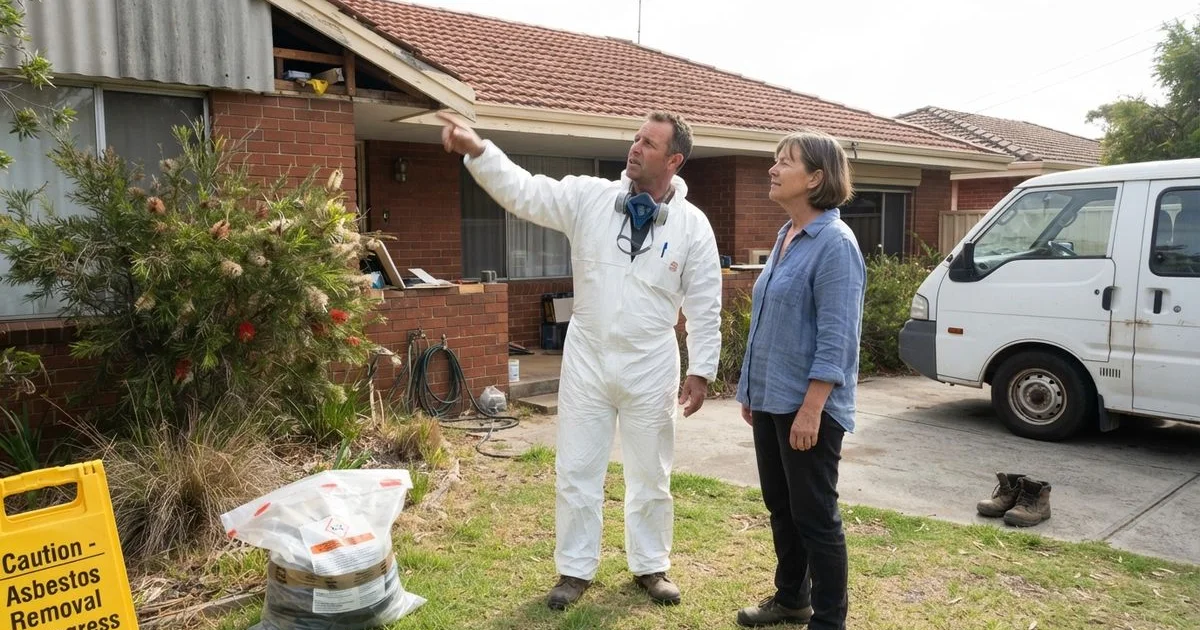
Perth has a large stock of homes built during decades when asbestos-containing materials were standard in construction. If you’re renovating a home from that era, understanding where it typically shows up and how to handle it safely is worth doing before demolition starts, not after.
This is general health and safety information, not a substitute for a professional asbestos assessment. If you suspect a material contains asbestos, have it tested before disturbing it, and use a licensed assessor or removalist for anything beyond the smallest, clearly low-risk task.
Where it commonly turns up
In homes built before the early 1990s, asbestos-containing materials were used widely and can appear in more places than people expect. Fibro (asbestos cement) sheeting is common in external walls, eaves and soffit linings, especially in homes from the 1950s through to the 1980s. Some old vinyl floor coverings and the adhesive underneath can contain it too, as can certain textured ceiling coatings and some older pipe lagging. It’s not limited to one obvious material, which is exactly why testing matters more than guessing.
| Common location | Era it’s more likely | What to do |
|---|---|---|
| Fibro wall sheeting, eaves | 1950s–1980s homes | Have it tested before removal or disturbance |
| Vinyl floor coverings and adhesive | Pre-1990s | Test before lifting or sanding |
| Textured ceiling coatings | 1970s–1980s | Test before scraping, sanding or drilling |
| Old pipe lagging or insulation | Pre-1990s | Have a professional assess before touching |
Why disturbing it is the real risk
Asbestos in good condition and left undisturbed generally isn’t considered an immediate hazard. The danger comes when it’s broken, drilled, sanded, cut or demolished, which releases fibres into the air where they can be inhaled. This is exactly the kind of disturbance that happens during a renovation: pulling down old sheeting, sanding a wall before painting, or ripping up old flooring. That’s why testing before demolition matters more in a renovation than in everyday household use.
This is also why a DIY approach to demolition on an older Perth home carries more risk than people often assume. A weekend spent pulling down old fibro fencing or ripping up an old kitchen without testing first can expose you, your family and your neighbours to fibres, with no visible sign anything’s wrong until much later. The safer approach is always to treat suspect material as asbestos until testing proves otherwise.
Getting it tested and, if needed, removed
If your home was built before the early 1990s and you’re planning any work that disturbs walls, ceilings, floors or eaves, have suspect materials tested by a qualified assessor first. If asbestos is confirmed, a licensed asbestos removalist can safely remove it and arrange disposal through an approved facility, which is a legal requirement for anything beyond very limited amounts. Trying to save money by removing it yourself, or having a general renovation crew handle it without the right training, isn’t worth the health risk to you, your family, or the tradespeople working on your home afterward.
Budgeting for it upfront
If your home’s age puts it in the higher-risk window, it’s worth asking your contractor to include an asbestos testing allowance in the initial quote rather than treating it as an unplanned extra. A contractor with real experience on older Perth homes will usually raise this themselves before you have to ask, which is a reasonable sign they know what they’re doing on this kind of property.
Ask, too, how they’ve handled it on previous jobs of a similar age and scope. A contractor who can talk through a specific example, what was found, how it was tested, how the schedule and budget adjusted, is generally more trustworthy on this front than one who gives a vague assurance that it’s “not usually a problem.” Given how common asbestos-containing materials are in Perth’s older housing stock, a contractor who hasn’t encountered it before is either inexperienced with this era of home or hasn’t been looking closely enough.
You can compare Perth renovation contractors experienced with older housing stock on this site’s directory, and see how listings are scored, including for consistency of past work, on the methodology page.
Common questions
- How can I tell if my home has asbestos?
- You generally can't tell just by looking. The only reliable way to know is to have a sample tested by a qualified assessor before you disturb any suspect material during demolition or renovation.
- Is it ever safe to remove asbestos myself?
- Rules around homeowner removal of small amounts of bonded asbestos exist in some circumstances, but they're specific and easy to get wrong. Given the health risk, engaging a licensed asbestos removalist is the safer choice for almost any renovation-scale job.
- Does finding asbestos always blow out the renovation budget?
- Not always, but it can add cost and time, since removal needs to happen safely before other work continues, and disposal has to go through licensed waste facilities. A contractor who's built this possibility into the plan handles it far more smoothly than one caught off guard.
- Which parts of an older Perth home are most likely to contain it?
- Fibro (asbestos cement) wall sheeting, old eaves and soffit linings, some vinyl floor coverings and their adhesive, and textured ceiling coatings are common locations in homes built before the early 1990s.